Ahad Ghadiri Sculpture Exhibition / Xuxan

Ahad Ghadiri Sculpture Exhibition / Xuxan
Opening: October 16, 2026 / 16 - 20
Visiting Hours: 16 - 20
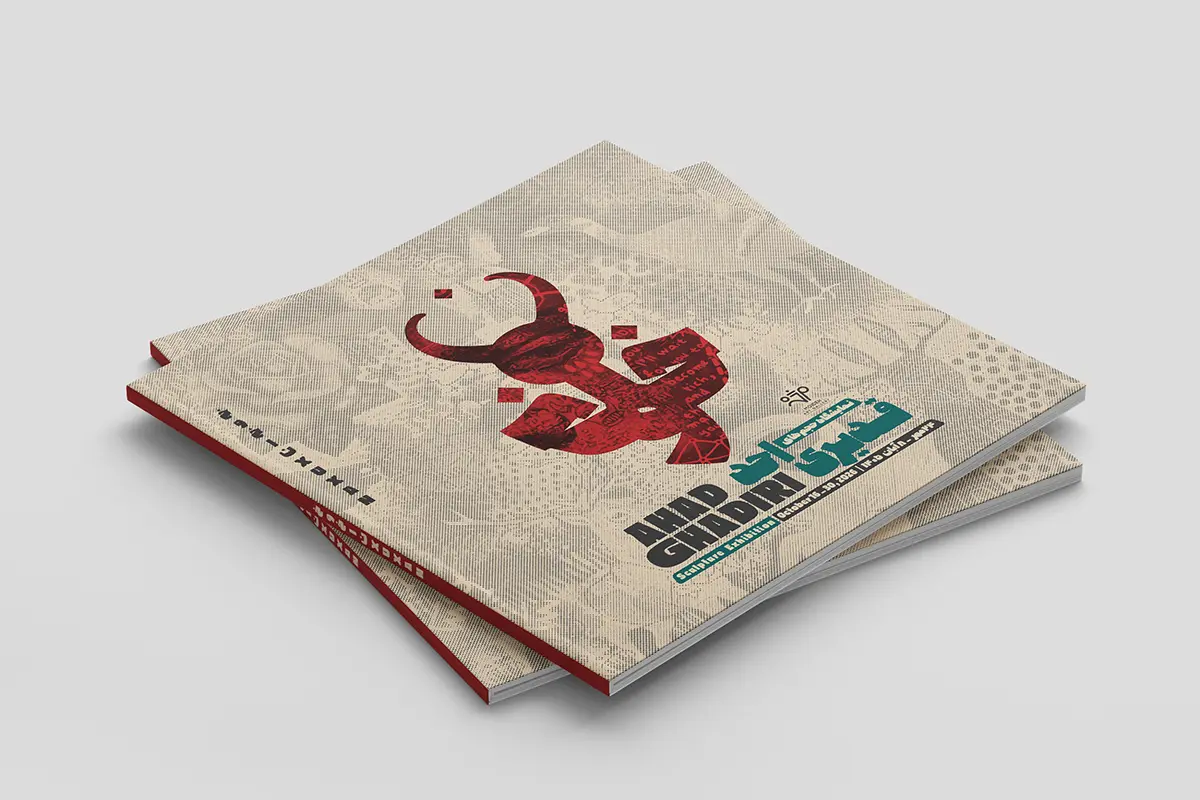
Xuxan
“Xuxan” in Azerbaijani Turkish means “the bogeyman,” a creature born from an imaginary legend that, in the past, was invoked to encourage children to behave well. The bogeyman has no specific appearance, and perceptions of this monster can vary dramatically from one society to another, and even from one family to another within the same society. Bogeymen are simply formless embodiments of fear in the mind.
The monster in this body of work, however, is not a mythical creature that comes from outside to serve as a source of fear. Rather, it refers to something within the human being: a part of “us” that usually remains hidden. In this series, the boundary between the human and animal faces is never fixed; instead, these boundaries dissolve entirely. Here, the animal is not merely a symbol or a visual subject, but represents an instinctive, raw, and repressed part of the human being— our inner monster, which we conceal in everyday life but which continues to live within us.
From a structural perspective, Ahad Ghadiri’s sculptural forms are hybrid. When examined in the context of culture and art, the term “hybrid” leads us to two definitions: a mythical composite body formed by combining two or more beings, and a hybrid medium in contemporary art, referring to the intermingling of artistic media and everyday objects within an artwork. In sculpture, therefore, the term “hybrid” can refer both to a creature born from an artist’s imagination and to a method of making. Throughout the deeper history of art, the hybrid was a body larger than the human, merged with powerful animals—as though it were an attempt to place the speaking animal alongside the power derived from the instincts of other creatures, standing at the threshold, ready to guard it. In certain periods of modern and contemporary art, this characteristic underwent a transformation. The hybrid descended from its position as a guardian and became a vulnerable, questioning body: one that no longer represented mythical power, but instead reflected the fragility, incomplete identity, and blurred boundaries of the contemporary human being.
At the same time, contemporary artists began moving beyond the traditional boundaries of sculpture, incorporating contradictory materials and everyday objects into their work and calling these forms hybrids. Ahad Ghadiri’s works occupy the point at which these two meanings converge.
His hybrids are not guardians, yet they stand at the threshold—not to protect it, but because, in their own diminished state, they are caught between two worlds. Through their unusual intersection of these two definitions, Ghadiri’s works may be among the closest embodiments of hybridity, both in form and in content.
On the one hand, they are composite figures; on the other, they are hybrid in the very way they are constructed. Yet what separates these bodies from their ancient lineage is not merely their combination of forms: it is their voice. These sculptural forms speak. The dialogues and paintings inscribed upon their bodies are traces of thoughts and voices that have emerged from within, transforming them into mirrors of the artist’s own outpouring. These forms reflect his rebellion, seemingly exposing a scream, a memory, or a fragment of the artist’s mind through strange and unfamiliar bodies.
Each “Xuxan” can be an image of an “other self”—a face that a person might encounter if the familiar layers of identity, reason, and social considerations were stripped away. The monster here is not the Other; it is a mirror that returns the human being to themselves. Accordingly, the surface of the sculpture is no longer merely the outer skin of a form, but a space for a scream that transcends the conventional function of the sculptural object.
Ultimately, Xuxan is not about monsters that live outside us, but about what lies within us: a creature that sometimes emerges from behind our familiar faces, reminding us that the boundary between human and animal, between what we recognize in ourselves and what we have concealed within, may not be as clearly defined as we imagine.
Saadat Afzood
News related to this exhibition was covered by Iranian news websites as follows: